Accessibility fix-a-thons
In 2026, we held two accessibility fix-a-thons for developers to collaborate on accessibility issues in real time.
Overview
The NC State University Libraries is committed to providing access to the Libraries collections, services, and spaces for all users. This includes ensuring that our websites are accessible so that everyone can access them, including, for example, users who have vision impairments or who utilize assistive technologies. Public institutions are required to comply with
In 2026, in pursuit of our goal to achieve WCAG 2.0 compliance for all of our patron-facing websites and software applications, the Accessibility Committee identified a need for developer-specific staff training. However, we faced challenges:
- developers were spread across multiple departments,
- staff had varying levels of digital accessibility expertise, and
- we utilize many different technologies, programming languages, and software stacks.
To address these challenges, the Digital Accessibility Working Group (DAWG) planned two themed co-working events called Accessibility Fix-a-thons. These fix-a-thons provided dedicated time for developers from different departments to come together, share expertise, and fix accessibility issues. In total, 11 developers from two departments worked together to fix over 18,000 errors across seven applications!
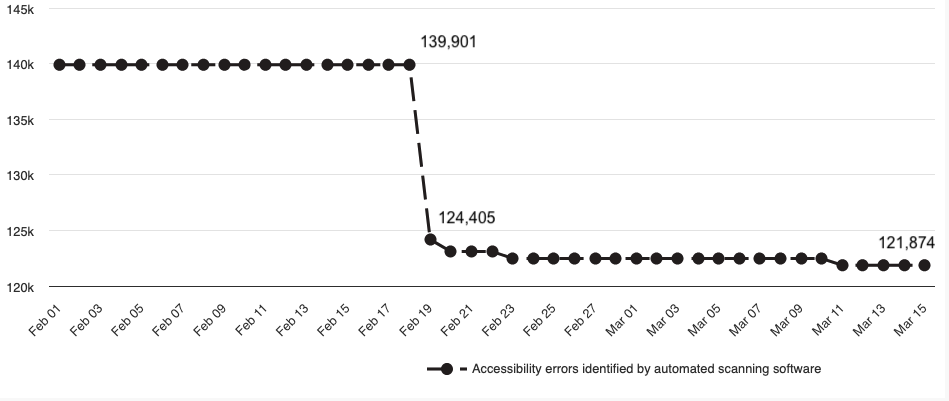
How We Did It
DAWG planned two fix-a-thon events for February and March 2026, one in person and one virtual, so that our colleagues with hybrid or remote schedules could participate. We sent out calendar invites to a large group of developers across multiple departments, and members of DAWG also promoted the events to our respective departments.
We created an interactive accessibility checklist to track our work, with several common accessibility errors and how to fix them, along with progress bars for remediating each type of error.

For the in-person fix-a-thon, eight developers gathered in a large conference room from 9:30am to noon. We provided breakfast pastries and coffee, listened to music, and swapped tips on navigating automated error reports and fixing various types of accessibility errors.
For the virtual fix-a-thon, we held a quick morning Zoom meeting to set goals for the day, then had a Google Chat group active throughout the day to ask and answer questions. We reconvened in the afternoon to share our progress via chat with plenty of celebratory emojis!

What's Next
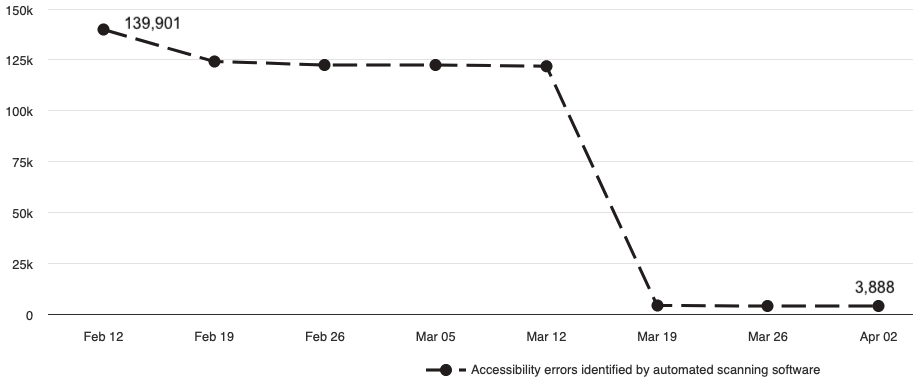
Thanks to further accessibility work and the retirement of one application, our total number of accessibility errors dropped even more:
The Digital Accessibility Working Group is collaborating on Targeted Accessibility Guides, which provide documentation for our developers. In addition, we are working on an internal applications checker as well as investigating whether providing an in-house review service would be helpful.


